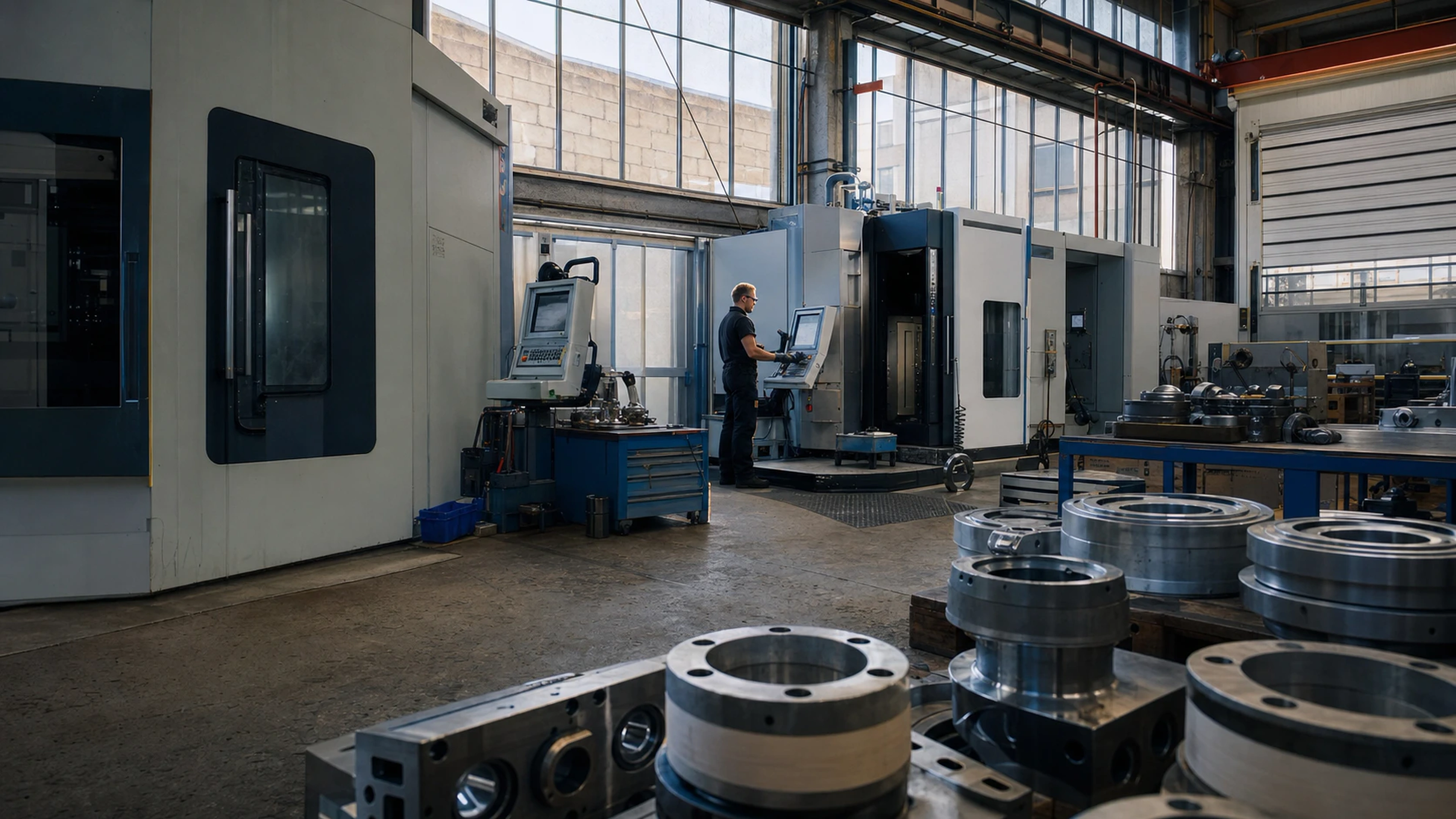
Selling a Manufacturing & Industrials Business
Sell your manufacturing or industrial business to a buyer who understands what drives value in physical assets.
The Manufacturing & Industrials M&A landscape in 2026
Manufacturing and industrial M&A requires advisors who understand the operational drivers of value - not just the financial statements. Working capital, capex requirements, supply chain complexity, and customer relationships are as important as EBITDA in determining price and deal structure. The buyer landscape spans PE consolidators, international strategic acquirers, and family-owned industrial groups seeking succession solutions.
Manufacturing M&A in 2025-2026 is shaped by two structural forces: the ongoing consolidation of fragmented industrial sectors by PE-backed platforms, and the interest of global strategic buyers in acquiring manufacturing capabilities, technology, or geographic presence. Reshoring trends in North America and Europe are elevating the strategic value of certain manufacturing assets. Automation and digital manufacturing capabilities - IoT integration, predictive maintenance, robotics - are increasingly valued by acquirers as they indicate scalability and margin improvement potential. Supply chain concentration and customer dependency remain the primary underwriting concerns.
For owners preparing a Manufacturing & Industrials sale, useful next steps include the preparation guide, the M&A sale process, and the guide to quality of earnings. Acquirers evaluating this sector should also consider buy-side advisory, target identification, and buy-side due diligence.
Location-specific perspectives are available for Manufacturing & Industrials in Frankfurt, Manufacturing & Industrials in Hamburg and Manufacturing & Industrials in Birmingham, which helps founders, shareholders, acquirers, and capital providers compare how buyer priorities differ by market.
Buy-side acquisition and capital considerations
The strongest outcomes in Manufacturing & Industrials transactions usually come from preparing for how buyers and capital providers will evaluate the company before the first approach is made. Financing questions should be assessed alongside the sale or acquisition plan through debt advisory considerations, not treated as a late-stage afterthought.
Buyer Lens
Industrial buyers test customer concentration, supplier dependency, production bottlenecks, asset condition, and whether margins are protected by specialised capabilities rather than commodity pricing.
Capital & Debt
Acquisition debt is influenced by working capital swings, maintenance capital expenditure, inventory quality, and the reliability of contracted order books.
Transaction Focus
Environmental matters, equipment condition, warranty exposure, customer contract transferability, and working capital normalisation are typically negotiated in detail.
Who buys Manufacturing & Industrials businesses
Understanding the buyer landscape is the starting point for any well-run sale process. Different buyer types have different motivations, valuation frameworks, and implications for what happens after you close.
PE-backed Industrial Consolidators
Roll-up platforms targeting fragmented manufacturing sectors - speciality chemicals, precision engineering, industrial distribution, building products, and others. These buyers understand manufacturing-specific risk, can model working capital requirements accurately, and have standardised approaches to post-close operational improvement.
International Strategic Acquirers
Large industrial corporations acquiring manufacturing capabilities, technology, geographic presence, or customer access. German, Japanese, US, and increasingly Chinese industrial groups are active buyers of European and North American manufacturing businesses. Strategic buyers can justify higher prices when industrial synergies are clear.
Family-owned Industrial Groups
Large family-owned industrial conglomerates that make strategic acquisitions to diversify or expand capabilities. Often move more slowly than PE buyers but offer more seller-friendly post-close arrangements and longer-term stewardship. Particularly prevalent in Germany, Switzerland, and the Nordics.
Private Equity Buyout Funds
Generalist PE funds acquiring manufacturing businesses with durable earnings, strong market positions, and identifiable operational improvement opportunities. Focus on businesses with sustainable EBITDA above €5M where leverage can be applied and margin improvement executed.
What is a Manufacturing & Industrials business worth?
Manufacturing businesses typically trade at 5–10x EBITDA, with the specific multiple driven by revenue quality, customer concentration, capex requirements, sector demand dynamics, and defensibility of market position. Asset-light, value-added manufacturing - speciality products, custom engineered components - commands higher multiples than commodity manufacturing. Businesses with recurring revenue through long-term contracts or service agreements trade at the upper end. Capital-intensive businesses with significant balance sheet assets may be valued partially on asset values. The guides to M&A multiples, working capital, and net debt and cash-free debt-free basis explain several of the adjustments that can affect proceeds and buyer confidence.
The honest answer: A multiple range on a page cannot tell you what your specific business is worth. The actual figure depends on which buyers are active when you run your process, how your business is positioned, and the competitive tension you generate. That is a conversation - and the first one is always at no charge.
Key deal dynamics in Manufacturing & Industrials M&A
Manufacturing & Industrials transactions involve deal mechanics, due diligence considerations, and structural questions that are specific to this sector. Understanding these upfront prevents surprises mid-process.
Working Capital Structuring
Manufacturing businesses typically carry significant working capital - inventory, receivables, and payables that vary seasonally and with order cycles. The definition of normalised working capital, and the peg mechanism used in the SPA, is a major negotiating point. Sellers who understand their working capital profile and can articulate what constitutes a normal balance for their business are in a stronger position.
Environmental and HSE Due Diligence
Environmental liability is a significant risk in manufacturing transactions. Buyers will commission environmental due diligence on owned and historically occupied properties, and will want indemnification for pre-existing environmental conditions. Businesses with clean environmental records and well-documented HSE practices create fewer deal complications.
Customer Concentration and Contract Terms
Manufacturing businesses with revenue concentrated in a small number of OEM customers or end-markets will face intense buyer scrutiny on contract terms, renewal risk, and pricing power. Long-term supply agreements with blue-chip customers are positives; undocumented or informal customer relationships are significant diligence risks.
Capex Requirements and Asset Condition
Buyers will conduct detailed assessments of plant and equipment age, condition, and maintenance history. Deferred maintenance or significant near-term capex requirements will be modelled as acquisition costs and reduce the equity value they are willing to pay. Well-maintained assets with documented maintenance records support stronger valuations.
What Manufacturing & Industrials buyers are looking for right now
Active Manufacturing & Industrials buyers are selective about what they will underwrite. Strategic acquirers, sponsor-backed platforms, family offices, and capital providers each bring specific criteria, detailed diligence processes, and clear views on what constitutes a quality asset. Understanding those buyer priorities before a process begins is one of the most important preparation steps for a founder or shareholder.
Defensible market position
Manufacturing businesses with proprietary products, patents, speciality capabilities, or long-standing customer relationships that competitors cannot easily replicate command the strongest buyer interest and highest multiples.
Diversified customer base with contracts
Documented long-term supply agreements with a diversified customer base provide revenue visibility and reduce the risk profile that buyers must underwrite. Customer concentration above 20-25% in a single customer will be closely examined.
Management team with operational depth
Buyers want to see plant managers, production supervisors, and commercial staff who can operate the business independently. Founder-dependent manufacturing businesses - where the owner holds key customer relationships or technical know-how - create transition risk that affects price and structure.
Scalable operations with automation investment
Businesses that have invested in automation, digital manufacturing, and operational technology are positioned as future-ready and carry lower labour risk. This is increasingly a differentiating factor in buyer assessments.
Public Market References
Sources that help frame Manufacturing & Industrials transactions
Public data cannot value a specific company, but it helps frame sector demand, financing conditions, regulation, and buyer priorities before the discussion turns to company-specific revenue quality, customers, margins, contracts, and leadership.
OECD industry and business analysis
Industrial policy, manufacturing, productivity, and business-sector context.
Eurostat industry statistics
European industrial production, manufacturing, and sector indicators.
OECD data and policy analysis
Economic, industry, employment, productivity, and investment indicators used for cross-market context.
World Bank Open Data
Country-level economic, demographic, and development indicators used for international comparison.
Selling a Manufacturing & Industrials business in...
We advise Manufacturing & Industrials businesses across all major markets
Also on Palmstone Capital